Thesis
The world is on track for a 40% freshwater deficit by 2030. 19% of current water use is tied to industry, and industrial water use is growing at nearly four times the rate of other water demand. As the AI and energy sectors enter uncharted levels of growth, water has shifted from an environmental utility to a constraint to industrial scaling. We should be investing in manufacturing and building aggressively to support AI progress, but we need to be frank about the challenges we must overcome to realize this progress. Countless industrial projects, from chip fabs to data centers, lack the water they need to realize their potential. In Tucson, a proposed data center was denied access to municipal water due to drought risks.[1] In Texas, Tesla's lithium refinery broke ground without a secured water contract.[2]
This scarcity is a paradox of quality, not quantity. We are surrounded by water we cannot use. Texas alone sits atop 1,000 trillion gallons of brackish groundwater, and industrial facilities discharge constant streams of wastewater that could be reused. The barrier to growth is not a lack of supply; it is our inability to economically treat these saline sources.
Water treatment solutions are currently delivered in civil engineering terms, where site-specific engineering and heavy onsite labor requirements are systemic challenges. Speed to water access is slow, and existing treatment options require frequent maintenance, chemical top ups, and expensive disposal plans for high levels of brine. We are breaking this model.
We use first principles to take foundational technology from previously siloed verticals and create simple solutions that are a step change for operators and solve the core problems of operational reliability, ease of use, distributed access, and salinity control. We do not build for the lab; we build for the field. Traditional, large-scale desalination works on the coast, but the industrial reality of today’s freshwater needs requires distributed, modular systems, minimal waste, and operator-free reliability. We are productizing water treatment to fit industry budgets and run without specialists.
There are two key elements to this approach. First, we use advanced chemistry innovations specifically directed at salinity control, allowing us to push beyond standard water recovery limits, minimizing brine waste and extracting water where others can't. Second, we wrap that chemistry in ML-driven system design and controls, leveraging our automation background from Tesla. Our proprietary system uses state-of-the-art reasoning models for system design and uses separate models to self-optimize the control loops in real-time, allowing complex, high-recovery physics to run reliably in the field without a human operator.
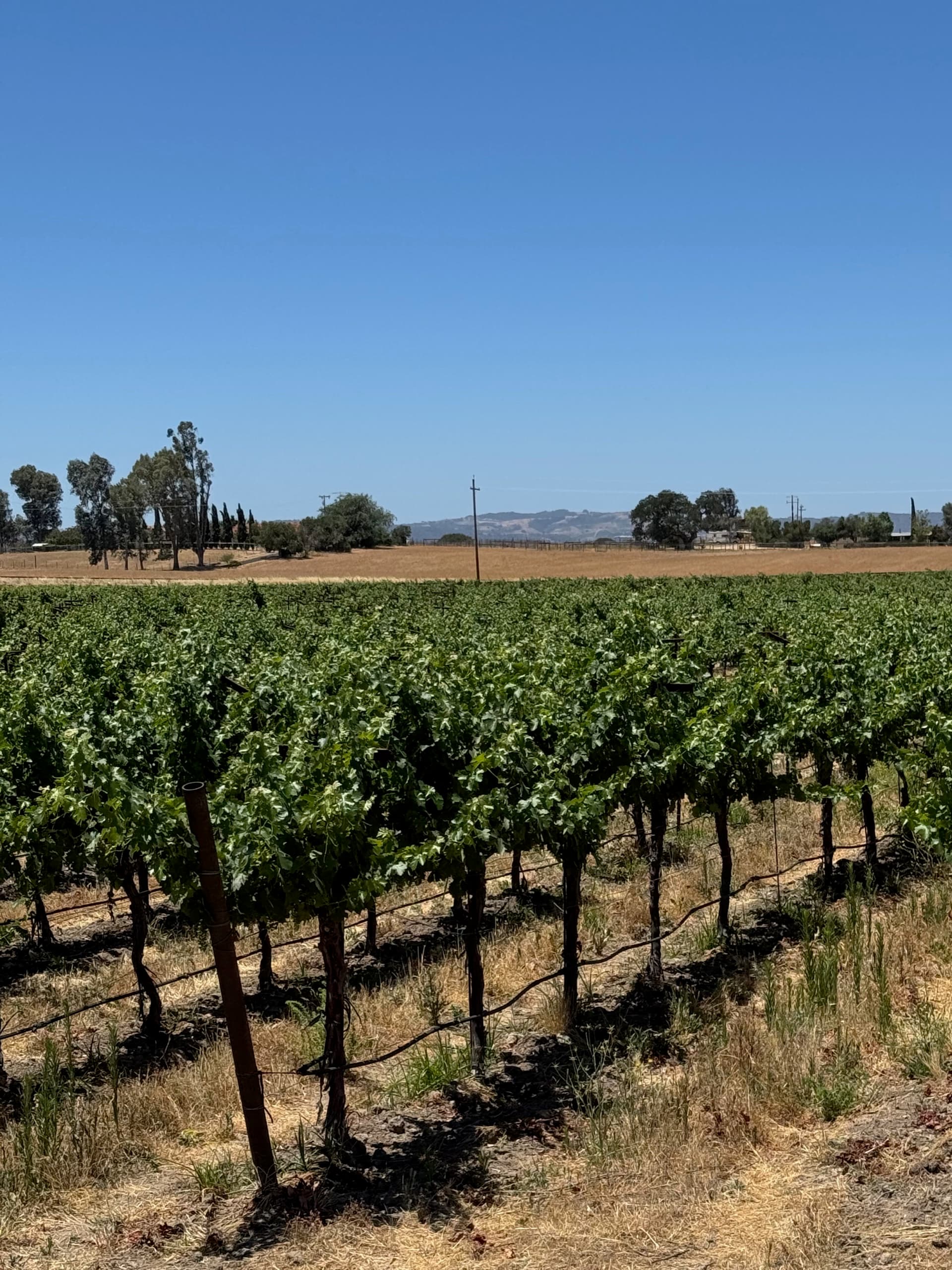
Our first pilot demonstrated >80% water recovery. Our next steps are to prove 3-month service intervals and increase recovery to >90% for our current winery pilot, responding to top pain points we’ve heard from inland desalination operators.
This pilot paves the way for our Master Plan:
- Commercialize our automated, high-recovery units for industrial "purple pipe" and cooling water, enabling onsite reuse for customers who need it the most.
- Transform waste liabilities into assets. Instead of paying disposal fees, our customers will use our high-recovery engine to turn waste into valuable industrial inputs.
- Leverage existing distributed networks to build the ultimate infrastructure: an intelligent, decentralized water grid that creates water abundance.